If you’re looking for the best AI apps for learning a new language, you’ve probably done this before: download an app, keep a streak alive for three weeks, feel good about yourself, and then freeze the moment someone actually speaks to you…, keep a streak alive for three weeks, feel good about yourself, and then the moment someone actually speaks to you in that language, you freeze. That gap between “I’ve been studying” and “I can actually talk” is the single biggest problem in language learning, and it’s exactly what AI apps were supposed to fix.
Some of them genuinely do. A lot of them just bolt a chatbot onto an old app and call it innovation. After digging through what these tools actually do well (and where they quietly fall short), here’s an honest breakdown to help you pick something that actually gets you talking, not
That’s exactly why finding the best AI apps for learning a new language makes such a big difference.
Why Speaking Practice Matters More With the Best AI Apps for Learning a New Language
There’s a well-known idea in linguistics called the Output Hypothesis, and it basically says this: you don’t get fluent by reading and listening alone. You get fluent by producing the language yourself, out loud, and being forced to notice what you don’t actually know yet. Passive study teaches you to recognize words. Active speaking is what actually builds fluency.
This is exactly why so many students who’ve “studied” a language for years still can’t hold a basic conversation. They memorized vocabulary lists and never had to produce a single unscripted sentence under pressure. AI conversation apps exist specifically to close that gap, since they let you practice speaking on demand, without needing a human partner, a scheduled lesson, or the anxiety of embarrassing yourself in front of someone real.
Once you know what to look for, the best AI apps for learning a new language become obvious choices.
The Five Types of AI Language Apps (And Why This Matters)
Not every AI language app is trying to do the same job. Understanding which category a tool falls into saves you from picking the wrong one for what you actually need.
Conversation apps are built around one thing: getting you talking in real time. No flashcards, no grammar drills, just back-and-forth dialogue. This is where you build actual speaking fluency.
Pronunciation apps zoom in on how you’re saying individual sounds, not whether your grammar is correct. Great for accent work, not built for holding a conversation.
Gamified apps are the ones you already know, built around streaks, points, and daily habits, with AI features often added on top rather than built into the core.
Hybrid apps combine a structured curriculum (grammar, vocabulary, reading) with some AI conversation practice layered in, giving you breadth but usually shallower conversation depth than a dedicated conversation app.
General AI assistants like ChatGPT or Gemini weren’t built for language learning at all, but their voice modes work well enough as a free, unstructured way to practice talking in another language.
For Building a Daily Habit: Duolingo
Duolingo is still the app most people start with, and there’s a good reason for that. The bite-sized lessons and streak system genuinely work for building consistency, which is half the battle when you’re starting something new.
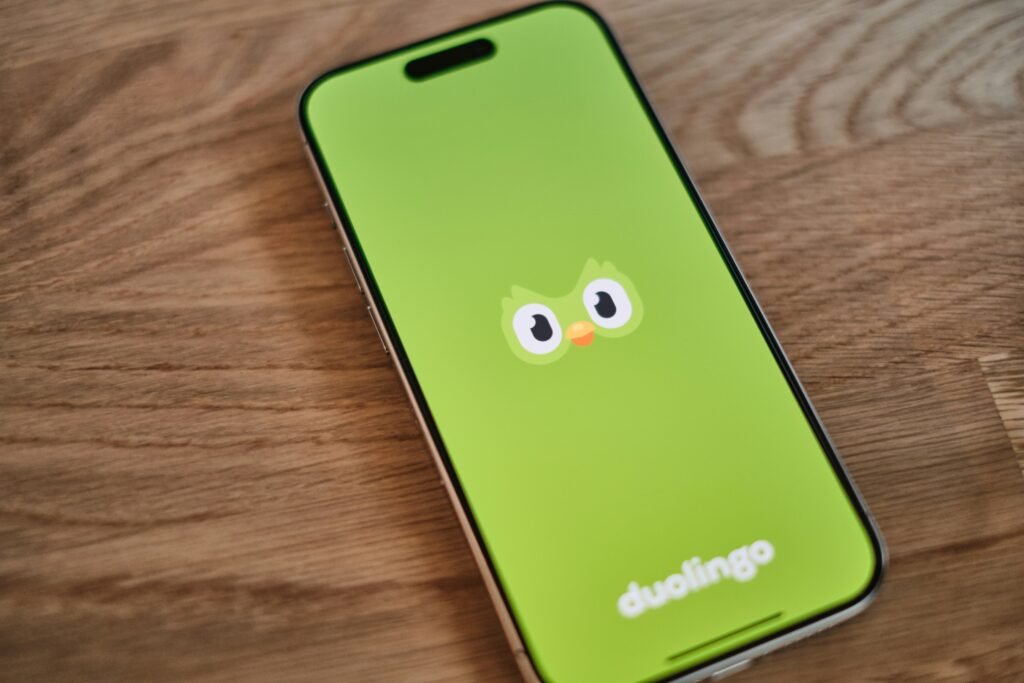
Where it gets interesting is the paid Max tier, which adds AI-powered roleplay conversations and a feature that explains why your answer was right or wrong instead of just marking it incorrect. That second part alone removes a lot of the frustration beginners feel.
The honest limitation: the AI here supports the habit-building loop, it doesn’t replace serious speaking practice. If your only goal is fluency, Duolingo works best as a starting point or a secondary app, not your whole strategy.
This is the real test for any of the best AI apps for learning a new language — do they get you talking, or just tapping?
For Structured Learners Who Want a Clear Path: Babbel and Busuu
If open-ended AI conversation stresses you out and you’d rather know exactly what you’re supposed to be learning next, Babbel and Busuu are built for that. Both use a curriculum designed by actual linguists, with grammar explanations and practical dialogues introduced in a logical order, and both have layered AI conversation practice on top of that foundation.
The trade-off is depth on the AI side. Neither is trying to be your primary conversation partner. They’re trying to teach you the language systematically first, with AI as reinforcement rather than the main event. If you’ve bounced off apps that throw you into freeform chat too early, this structured approach is a safer entry point.
Not every app makes that cut, which is why picking from the best AI apps for learning a new language matters more than downloading whatever ranks first.
For Real Conversation Practice: The Dedicated Conversation Apps
This is where things get genuinely impressive, and also where quality varies the most. A handful of apps (Langua, Praktika, Speak, and TalkPal are the ones worth knowing) exist purely to simulate real conversation, and they take noticeably different approaches to it.
Langua tends to stand out for conversation depth and voice quality that’s hard to distinguish from an actual person. It saves vocabulary you use mid-chat, gives detailed feedback after each session, and even has a hands-free call mode where you can interrupt it mid-sentence the way you would on a real phone call.
Praktika leans into an engaging, almost classroom-style feel, with animated AI tutors that remember details from earlier conversations and keep things entertaining without losing structure.
Speak is worth calling out specifically for beginners. Instead of throwing you straight into open conversation, it builds up through video lessons with real instructors, short speaking drills, and targeted practice based on your specific mistakes. If you’re starting from zero, this kind of scaffolding matters a lot more than a chatbot that assumes you already know what you’re doing.
TalkPal’s main strength is sheer language coverage, supporting well over 80 languages. If you’re learning something less common that other apps simply don’t offer, this is often your only real AI conversation option.
The honest caveat across all of these: pronunciation scoring is still hit or miss industry-wide. Several of these apps will confidently tell you your pronunciation is correct when it isn’t, which can quietly build bad habits if you’re relying on the app alone to catch your mistakes.
If you’ve struggled to stay consistent before, the best AI apps for learning a new language are built differently — they focus on real conversation, not just streaks.
For Pronunciation Specifically: ELSA Speak
If your actual bottleneck isn’t vocabulary or grammar but people simply not understanding you when you speak, ELSA Speak solves a narrower but very real problem. It analyzes your pronunciation at the level of individual sounds and tells you exactly which ones are off, sometimes down to tongue and lip position.
It’s English-only and it’s not a conversation tool, so don’t expect it to replace speaking practice. Think of it as a specialist you bring in alongside a broader app, not a standalone solution.
At the end of the day, the best AI apps for learning a new language are the ones you actually stick with.
For Real Human Practice: HelloTalk
At some point, practicing with AI stops being enough, and that’s where HelloTalk fits in. It connects you with real native speakers for language exchange, using AI features like translation and suggested corrections to reduce the friction that usually makes talking to strangers in a new language intimidating.
The catch is that quality depends entirely on who you’re matched with. Some partners give genuinely thoughtful corrections, others just want casual small talk, and some disappear after two messages. It’s less predictable than a structured app, but that unpredictability is exactly what exposes the gaps between textbook phrases and how people actually talk.
So before you download another app, make sure it’s actually one of the best AI apps for learning a new language — not just the most popular one.
The Free, No-Commitment Option: ChatGPT or Gemini Voice Mode
If you’re not ready to commit to a dedicated app yet, the voice modes on ChatGPT and Gemini are a genuinely underrated way to get started. You can have a natural-sounding conversation in almost any language, switch topics freely, and even set up a scenario like “pretend you’re a waiter in Paris and only speak French to me.”
The catch: these tools weren’t built for language learning. There’s no progress tracking, no vocabulary saving, and it won’t correct your grammar unless you specifically ask it to, which means you could be reinforcing mistakes without realizing it. Treat this as a free way to get extra speaking reps in, not a replacement for a dedicated app.
How to Actually Build a Stack That Works
Trying to find one app that does everything well is usually a losing game, because these tools tend to be strongest in exactly one lane. A setup that tends to work well for most learners looks something like this:

- A base app for daily structured practice, whether that’s Duolingo, Babbel, or a conversation-first app like Speak or Langua
- A pronunciation layer like ELSA Speak if accent and clarity are a specific pain point
- A human interaction layer like HelloTalk once you can sustain a short conversation without panicking
- A free supplement like ChatGPT voice mode for extra reps when you don’t feel like opening a dedicated app
Final Thought
There’s no single “best” AI language app, and chasing one is a waste of time better spent actually practicing. The students who make real progress aren’t the ones with the fanciest app, they’re the ones who picked something that gets them producing the language daily and actually stuck with it. Start with whichever category matches your real bottleneck, whether that’s consistency, structure, pronunciation, or pure conversation reps, and let the app fit the gap instead of trying to force one app to do everything at once.